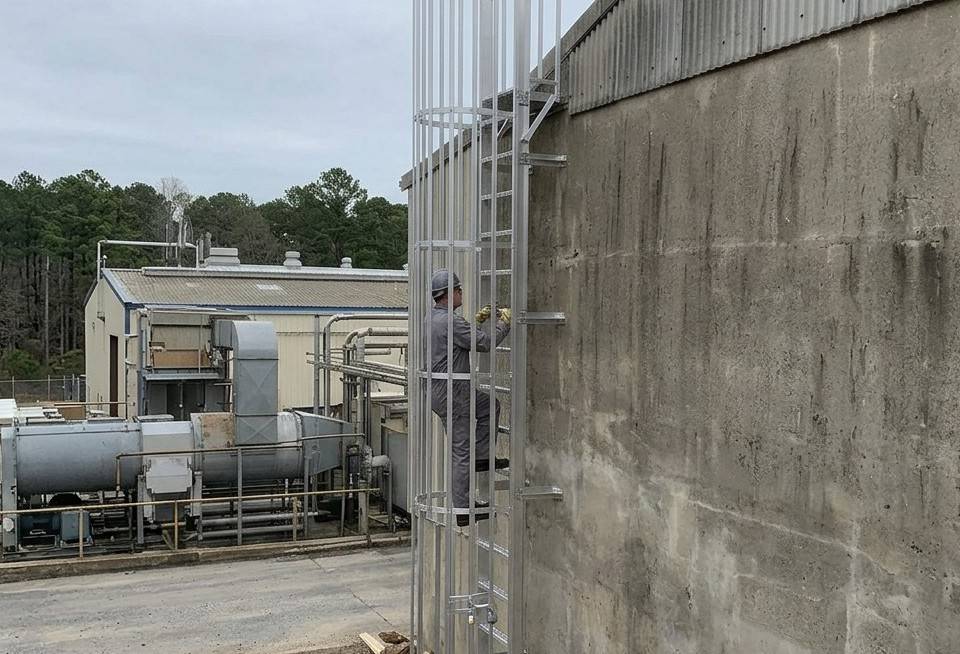
Industrial facilities require safe vertical access to rooftops, platforms, silos, tanks, and maintenance areas. A CAT ladder with cage provides a permanent access solution while enhancing worker safety and regulatory compliance.
Selecting the right CAT ladder with cage involves evaluating material, load capacity, installation location, environmental conditions, and safety standards. This guide covers the key selection factors, applicable standards, and best practices for safe installation and maintenance.
What Is a CAT Ladder with Cage?
A CAT ladder with cage is a permanently installed vertical ladder with a protective cage that improves safety during climbing. While newer regulations may require ladder safety systems for taller ladders, caged ladders remain widely used for compliant fixed access.
These ladders are commonly installed on:
- Industrial buildings
- Warehouses
- Water treatment plants
- Manufacturing facilities
- Telecommunication towers
- Power plants
- Storage tanks
- Commercial rooftops
Their primary purpose is to provide permanent, secure access for inspection, maintenance, and emergency operations. For projects requiring exceptional durability and corrosion resistance, an Afton Steel CAT ladder offers a dependable fixed access solution designed for demanding industrial environments.
Why Choose a CAT Ladder with Cage?
Installing a CAT ladder with cage offers several advantages for industrial facilities.
Improved Worker Safety
The protective cage surrounds the climbing area, helping workers maintain alignment while climbing and reducing the likelihood of losing balance.
Permanent Access Solution
Unlike portable ladders, fixed ladders provide immediate and reliable access without requiring setup before every use.
Space Saving Design
Vertical ladders occupy very little floor space, making them ideal for buildings with limited access areas.
Long Service Life
When manufactured from galvanized steel, stainless steel, or aluminum, fixed ladders provide decades of dependable performance with minimal maintenance.
Regulatory Compliance
Professionally engineered ladders help facilities comply with workplace safety regulations and project specifications when designed and installed according to applicable standards.
Key Factors When Selecting a CAT Ladder with Cage
Choosing the correct ladder requires evaluating several technical considerations.
1- Ladder Height
The overall climbing height determines whether additional features such as landing platforms, ladder safety systems, or rest platforms may be required under applicable standards.
Measure from the finished floor level to the final access point before selecting the ladder.
2- Material Selection
The environment largely determines the most suitable material. If you’re looking for premium fixed access systems, explore the range of industrial ladders available from Afton Tools UAE to find solutions that match your site’s safety and performance requirements.
Galvanized Steel
Ideal for heavy industrial applications requiring high strength and corrosion resistance.
Stainless Steel
Recommended for marine environments, food processing plants, pharmaceutical facilities, and chemical industries.
Aluminum
Offers lightweight construction with excellent corrosion resistance, making it suitable for commercial buildings and rooftop access.
3- Load Capacity
The ladder should safely support:
- Worker weight
- Personal protective equipment
- Maintenance tools
- Emergency usage
Industrial ladders are generally designed with appropriate structural safety factors for demanding environments.
4- Mounting Configuration
Depending on the building design, ladders may be installed on:
- Concrete walls
- Steel structures
- Tanks
- Silos
- Mechanical equipment
- Building facades
Proper brackets and anchor systems are essential for structural stability.
5- Environmental Conditions
Consider exposure to:
- Coastal salt air
- High humidity
- Chemicals
- Extreme temperatures
- UV radiation
- Heavy industrial pollution
Selecting corrosion-resistant materials significantly extends service life.
Understanding Ladder Cage Design
The cage is designed to surround the climbing path while providing sufficient clearance for comfortable movement.
Typical cage components include:
- Vertical bars
- Horizontal hoops
- Entry flare
- Upper exit section
Proper cage dimensions improve user safety while maintaining climbing comfort. OSHA specifications include guidance on cage width, hoop spacing, bottom flare, and extension above the landing platform.
Important Safety Standards
Industrial ladders should comply with recognized engineering standards wherever applicable.
OSHA Standards
OSHA provides detailed requirements for fixed ladders covering:
- Ladder dimensions
- Cage construction
- Landing platforms
- Climbing clearances
- Ladder safety systems
- Personal fall protection
For newer installations above specified climb heights, OSHA generally requires ladder safety systems or personal fall arrest systems rather than relying solely on cages.
ANSI Standards
ANSI fixed ladder standards establish engineering guidelines for:
- Structural strength
- Materials
- Design requirements
- Safe climbing practices
These standards help ensure consistent manufacturing quality.
ISO Standards
International projects often specify ISO-compliant fabrication, welding quality, corrosion protection, and dimensional tolerances for fixed access systems.
When Is a Cage Required?
Requirements vary depending on local regulations, installation date, ladder height, and the applicable code.
Many existing industrial facilities continue using caged ladders, while newer projects may require ladder safety systems or fall arrest equipment for taller fixed ladders. Always verify the governing regulations for your project before fabrication or installation.
Installation Best Practices
Proper installation is equally important as selecting the correct ladder.
Best practices include:
- Verify structural support before installation.
- Use certified anchors and mounting brackets.
- Maintain proper wall clearance.
- Install secure landing platforms where required.
- Ensure unobstructed climbing access.
- Inspect all welds and fasteners before commissioning.
- Test ladder stability after installation.
Professional installation minimizes safety risks and extends service life.
Maintenance and Inspection
Routine inspection helps identify potential issues before they become safety hazards.
A regular inspection should include:
- Corrosion assessment
- Loose anchor bolts
- Damaged rungs
- Cage deformation
- Weld condition
- Protective coating damage
- Structural movement
- Clean climbing surfaces
Preventive maintenance significantly reduces long-term repair costs while maintaining compliance.
Common Applications
A CAT ladder with cage is suitable for numerous industries, including:
- Manufacturing Plants: Provides safe access to machinery, overhead equipment, and maintenance platforms.
- Warehouses: Enables secure rooftop and storage area access for inspections and repairs.
- Airports: Supports maintenance personnel in accessing terminal buildings, hangars, and service structures.
- Oil and Gas Facilities: Offers reliable vertical access to tanks, pipelines, and processing equipment in demanding environments.
- Petrochemical Plants: Ensures safe access for routine inspections and maintenance in corrosive industrial settings.
- Utility Stations: Facilitates maintenance of electrical, water, and power infrastructure with permanent access solutions.
- Telecommunications Facilities: Allows technicians to safely reach communication towers and rooftop installations.
- Food Processing Facilities: Provides hygienic and durable access to elevated equipment and production areas.
- Commercial Buildings: Offers safe rooftop access for HVAC servicing, inspections, and building maintenance.
- Water Treatment Plants: Supports operators with secure access to tanks, treatment units, and elevated structures.
Their versatility makes them one of the most widely used permanent access systems worldwide.
Choosing the Right Manufacturer
The quality of fabrication directly impacts worker safety.
Choose a manufacturer that offers:
- Custom fabrication
- Certified welding
- Precision engineering
- High-quality materials
- Compliance with applicable standards
- Corrosion-resistant finishes
- Project-specific design support
- Reliable after-sales service
Working with a trusted ladder supplier UAE ensures you receive ladders that are engineered for safety, built to international standards, and customized for your project’s specific access requirements.
Conclusion
Choosing the right CAT ladder with cage ensures safe, reliable, and standards-compliant access to elevated work areas. Considering factors like ladder height, material, and installation requirements helps improve workplace safety and long-term performance.
For dependable fixed access solutions, partnering with an experienced manufacturer is just as important as selecting the right ladder design. Abul Fazl Trading LLC manufactures high-quality CAT ladders with cage that are custom fabricated to meet international safety standards and the specific requirements of industrial, commercial, and infrastructure projects across the UAE.
Contact Abul Fazl Trading LLC today for durable, standards-compliant ladder systems engineered for long-lasting safety and performance.
Explore More Related Guides
- CAT Ladder Installation Guide for Industrial Buildings: Everything you need to know for safe, compliant CAT ladder installation.
- How to Choose the Right Handrail Fabrication Company in UAE: Expert guide to selecting trusted UAE handrail fabricators.
- What Is a Cat Ladder? Essential Guide and Uses: Complete guide to CAT ladder safety, types, and industrial uses
- CAT Ladder with Cage vs Platform Ladder: Which Is Better? Compare safety, applications, and key differences to choose the right ladder for your project.
- How to Maintain CAT Ladders for Long-Term Safety: Keep Your CAT Ladder safe, strong, and standards compliant.