


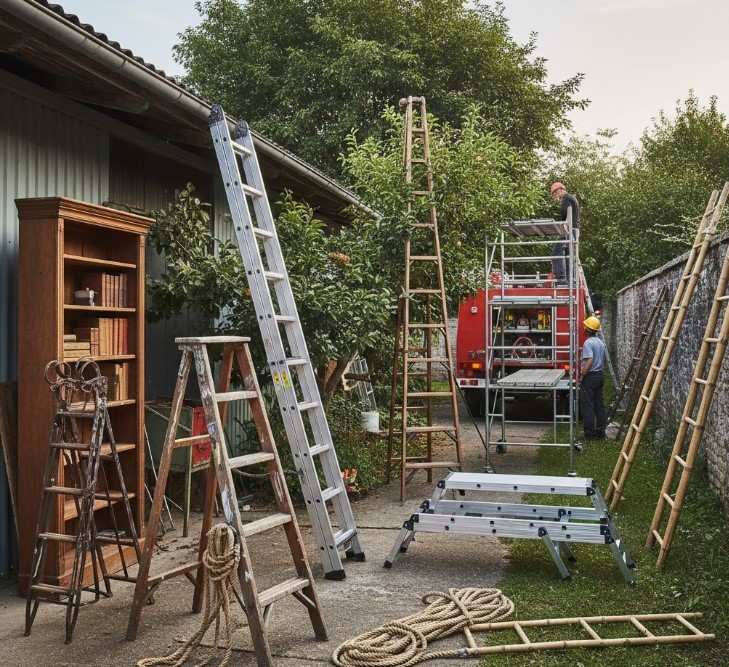
18 Feb A Complete Guide to Different Types of Ladders & Their Uses
Ladders are essential tools in construction, maintenance, and everyday tasks, providing safe access to elevated areas. Choosing the right ladder ensures efficiency, durability, and safety across industries.
This guide explores the types of ladders, their practical applications, materials, certifications, and how to make the best selection for your needs.
What is a Ladder?
A ladder is a portable structure used to climb to different heights safely. Ladders come in multiple designs, including step ladders, extension ladders, and multi-purpose ladders, each suited for specific tasks. Understanding their construction, material, and capacity is crucial for workplace safety.
Ladders are often classified by material, including aluminum, fiberglass, and wood, each offering unique advantages in strength, weight, and electrical resistance. Certified ladders comply with EN 131 and OSHA standards to ensure reliability on job sites.
Types of Ladders and Their Uses
Step Ladders
Step ladders are self-supporting and ideal for indoor tasks such as painting, shelving, and light maintenance. They offer stability and are usually made from aluminum or fiberglass.
- Lightweight and portable
- Foldable for easy storage
- Suitable for tasks up to moderate heights
Step ladders are perfect for electricians or painters who require mobility and quick setup without compromising safety.
Extension Ladders
Extension ladders provide variable length, making them suitable for accessing roofs, tall walls, and industrial structures. Most are constructed from aluminum for lightness or fiberglass for non-conductive applications.
- Adjustable height for versatile use
- Requires wall or surface support
- Can reach significant heights safely
Professional contractors prefer extension ladders for exterior maintenance, roofing, and large-scale painting projects.
Multi-Purpose Ladders
Multi-purpose ladders combine the functionality of step and extension ladders, offering H-frame, A-frame, or scaffold configurations. They are highly versatile and adaptable for indoor and outdoor use.
- Configurable into multiple shapes
- Ideal for compact storage
- Meets EN 131 certification for safety
This ladder type suits facilities managers, builders, and maintenance teams needing flexible solutions.
Platform Ladders
Platform ladders provide a stable standing area with guardrails for prolonged tasks like installing signage or lighting. Constructed from durable aluminum or fiberglass, these ladders enhance comfort and safety for long-duration work.
- Comfortable platform reduces fatigue
- Higher weight capacity than step ladders
- Excellent for industrial and warehouse use
Platform ladders are often chosen for repetitive tasks requiring stability and balance.
Specialty Ladders
Specialty ladders include attic ladders, fire escape ladders, and library ladders, each designed for niche applications. These are engineered to maximize space utilization and safety in confined or emergency situations.
- Foldable or retractable designs
- Lightweight materials for quick deployment
- Compliant with local safety regulations
Homeowners and safety-conscious businesses often invest in specialty ladders to address unique access challenges efficiently.
Comparison Factors to Choose the Right Ladder
Material Selection
Choose ladders based on your work environment. Aluminum ladder is lightweight and portable, fiberglass ladder is non-conductive for electrical tasks, and wood is sturdy but heavier.
Height and Reach
Match ladder height to your task. Always select a ladder slightly taller than the work area to maintain safety and reduce strain.
Weight Capacity
Ensure the ladder can support the user and tools. Check manufacturer specifications to handle combined load without risk of bending or collapse.
Certifications and Standards
Look for ladders certified under EN 131, OSHA, or ISO standards. Certified ladders guarantee structural integrity and compliance with safety regulations.
Durability and Warranty
High-quality ladders come with reinforced rungs, slip-resistant feet, and manufacturer warranties. This ensures long-term performance and access to technical support.
Practical Features
Consider foldability, platform stability, and portability. Features like adjustable angles or multi-purpose configurations enhance usability and safety.
Ladder Types, Materials, and Ideal Uses Comparison
| Ladder Type | Material Options | Height Range | Ideal Use | Certification |
|---|---|---|---|---|
| Step Ladder | Aluminum, Fiberglass | 3 – 6 ft | Indoor tasks, maintenance | EN 131, OSHA |
| Extension Ladder | Aluminum, Fiberglass | 10 – 40 ft | Roofing, exterior maintenance | EN 131, OSHA |
| Multi-Purpose Ladder | Aluminum, Fiberglass | 4 – 18 ft | Indoor & outdoor versatile use | EN 131, OSHA |
| Platform Ladder | Aluminum, Fiberglass | 4 – 12 ft | Industrial, warehouse tasks | EN 131, OSHA |
| Specialty Ladder | Aluminum, Fiberglass, Wood | 3 – 20 ft | Attics, fire escape, libraries | Local safety codes |
Materials and Construction
Ladders are made from:
- Aluminum: Lightweight, rust-resistant, ideal for indoor and outdoor tasks
- Fiberglass: Non-conductive, perfect for electrical work
- Wood: Traditional choice, sturdy but heavier and less portable
High-quality ladders feature slip-resistant feet, reinforced rungs, and corrosion-resistant finishes to ensure long-term durability.
Leading Ladder Brands and Suppliers
Trusted ladder suppliers provide warranties, technical assistance, and products adhering to international standards. Brands like Werner, Louisville, and Little Giant offer diverse models with guaranteed safety and reliability.
Choosing certified suppliers ensures compliance and dependable performance in industrial, commercial, or residential settings. For trusted products, consider a reputable ladder supplier Dubai to source certified ladders with ease.
How to Maintain Your Ladder
Proper maintenance extends ladder life:
- Inspect rungs, locks, and feet regularly
- Clean to prevent slip hazards
- Store in a dry, cool environment to avoid material degradation
Getting technical assistance for ladder inspection ensures workplace safety and compliance with safety standards.
FAQs
What ladder is best for indoor tasks?
Step ladders are ideal for indoor use due to their self-supporting design. They are portable, easy to fold, and perfect for painting, shelving, or light maintenance tasks.
Can I use aluminum ladders near electricity?
No, aluminum ladders conduct electricity, which makes them unsafe near live wires. Fiberglass ladders are non-conductive and recommended for electrical or utility work.
How do I choose the right ladder height?
Select a ladder slightly taller than the work area to maintain safe posture. Consider maximum reach and the ladder type for stability during prolonged tasks.
Are ladder certifications important?
Yes, certifications like EN 131 and OSHA ensure ladders meet strict safety standards. They indicate structural integrity, weight capacity, and compliance with workplace regulations.
Conclusion
Choosing the right ladder depends on task type, material, safety standards, and height requirements. Whether you need a step ladder for indoor maintenance or an extension ladder for high-reach construction work, prioritizing certified products ensures safety and efficiency.
For contractors and businesses in UAE seeking durable, safe, and reliable ladders, Abul Fazl Trading is a trusted source for premium ladder solutions, providing technical support and products built to meet global safety standards.
Contact our ladder specialists to select the ladder that best fits your operational needs.
Additional Practical Guides for Construction Site Safety
- Scaffolding Inspection Checklist: What to Check Before Use: Essential steps to ensure scaffolding safety and compliance every time.
- What Is Scaffolding? Types, Uses, and Safety Requirements: A complete guide on scaffolding, its types, uses & safety requirements.
- Steel vs Aluminium Scaffolding: Which One to Choose?: Compare strength, weight, and durability to pick the right scaffold.
- Guide to Scaffold Use in the Construction Industry in UAE: Explains approved usage practices, safety compliance, and on site regulations in the UAE.
- How to Choose the Right Scaffolding System in UAE: Helps buyers select the correct scaffolding based on project needs and load conditions.
- Benefits of AFTON Made in UAE Ladders Explained: Highlights the safety, durability, and performance advantages of locally manufactured ladders.

No Comments