Selecting the appropriate ladder for construction and maintenance work in the United Arab Emirates (UAE) is a critical decision that directly impacts safety, productivity, and regulatory compliance. The rapidly growing built environment in cities such as Dubai and Abu Dhabi demands careful attention to equipment selection given the high volumes of work at height, variable climatic conditions, and stringent occupational safety regulations.
This article provides an in‑depth professional guide on how to choose the right ladder, supported by relevant data, examples, case breakdowns, and expert regulatory perspectives.
Understanding Ladder Selection for Construction and Maintenance in the UAE
Work at height is a major risk factor in construction and maintenance, and falls from ladders constitute one of the leading causes of injuries in industrial environments worldwide. While there are no globally mandated figures specific to the UAE that quantify ladder injuries, international occupational safety reports (such as from OSHA) consistently highlight thousands of ladder‑related incidents annually in similar construction sectors.
In the UAE, local authorities such as Dubai Municipality and Abu Dhabi Occupational Safety and Health Centre (OSHAD) have issued comprehensive guidance on ladder use, selection, and safety practices. These guidelines align with international standards such as EN 131 and emphasise that ladders must be chosen based on task characteristics, environmental conditions, and ergonomic requirements.
The Importance of Regulations and Compliance
In the UAE, the Ministry of Human Resources and Emiratisation (MoHRE) enforces strict occupational health and safety regulations, including specific guidelines for ladder usage.
Key Regulations:
- Weight Capacity: Ensure that your ladder meets the required load capacity standards, which typically fall into categories such as Type I, II, and III.
- Safety Features: Ladders must include features such as slip-resistant feet and stabilizing bars.
- Inspection Protocols: Regular inspection of ladders is mandated to ensure safety compliance.
Failure to adhere to these regulations can lead not only to accidents but also to legal penalties and project shutdowns, making it essential to choose ladders that are compliant with local safety standards.
Key Criteria for Ladder Selection
Selecting the right ladder is not a one‑size‑fits‑all decision. The following sections describe essential criteria professionals must assess:
1. Task and Height Requirements
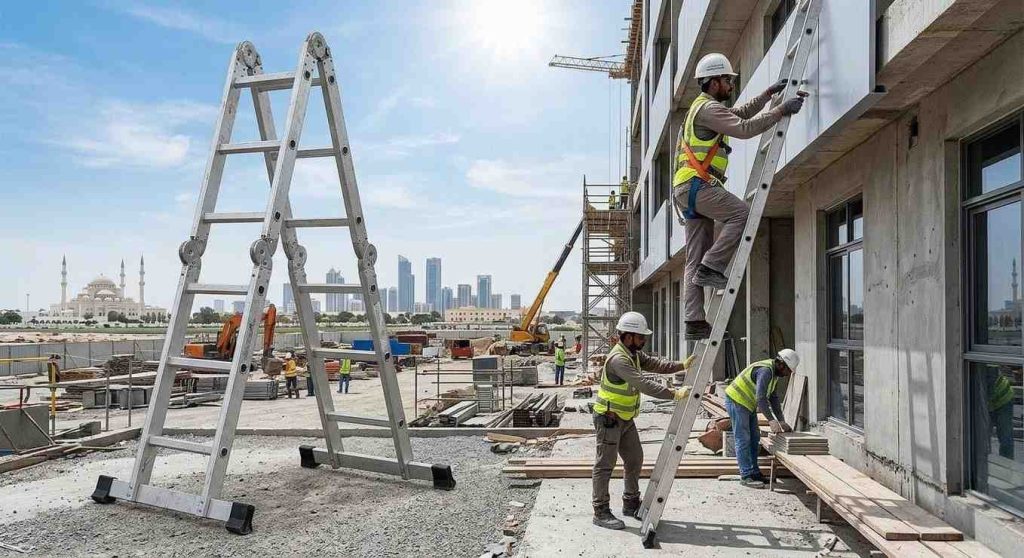
Matching ladder height to the work requirement ensures stability and reduces risk. A ladder that is too short encourages dangerous behaviours such as overreaching, whereas an excessively long ladder may be unwieldy and pose setup challenges. For indoor maintenance, a basic step ladder may suffice, whereas exterior façade work may require extension ladders that can reach higher elevations.
2. Load Capacity and Duty Rating
Ladders are categorised based on their load‑bearing capacity. Duty ratings reflect the weight of the user plus any tools or materials. Professional and construction ladders typically require a working load capacity of at least 150 kg, which aligns with safety recommendations for occupational settings.
3. Material Selection
Material choice affects ladder performance, durability, and safety:
- Aluminium Ladders: Lightweight, corrosion‑resistant and suitable for most general construction and maintenance tasks. For a reliable option, consider the AFTON aluminum ladder which is designed for professional site use.
- Fiberglass Ladders: Non‑conductive and ideal for electrical work or environments where insulation is crucial. Fiberglass ladders are sturdy and weather‑resistant but typically heavier than aluminium.
- Steel Ladders: Extremely durable and heavy‑duty, best suited for static industrial applications but prone to corrosion if not properly maintained.
4. Stability and Safety Features
Modern professional ladders incorporate numerous safety features, such as anti‑slip feet, stabilising bars, secure locking mechanisms, and ergonomic rung designs. These features are particularly important on construction sites where surfaces may be uneven, dusty, or sandy.
Types of Ladders and Their Use Cases
Step Ladders
Self‑supporting and ideal for tasks that require moderate height access. Step ladders are commonly used for interior maintenance, painting, and HVAC servicing. Compliance standards demand non‑slip feet, locking spreaders, and clearly marked load ratings.
Extension Ladders
Used for external tasks where reaching elevated areas is critical. These ladders must be properly anchored at both the base and top and set at the correct angle (about 75 degrees) to ensure stability.
Platform Ladders
Provide a stable working platform with guardrails, making them suitable for prolonged jobs such as installations and inspections. Design standards specify minimum platform size and guardrail height.
Multi‑Purpose Ladders
These versatile ladders can be configured as step, extension, or scaffold ladders, offering flexibility on diversified job sites. They require locking mechanisms that are robust and thoroughly tested. The AFTON multipurpose ladder is perfect for teams needing adaptability across tasks.
Telescopic and Folding Ladders
Suitable for maintenance teams and technicians who need portability and compact storage. These ladders are often used for urban construction and rapid site access. For a compact, high-quality solution, consider using the AFTON telescopic straight ladder.
Procurement Considerations and Supplier Selection
Choosing the right ladder supplier is crucial for quality and compliance. Key factors include:
- Product Range: A supplier should offer a diversified range to match varied construction and maintenance needs.
- Certified Products: Ladders must carry certifications from recognised organisations and conform to local safety standards.
- Durability: Ladder materials should withstand the UAE’s environmental conditions, including heat and potential moisture.
- Support Services: After‑sales support, training, and maintenance advice contribute to ongoing safety performance.
Inspection, Maintenance, and Training
Inspection Protocols
Before each use, ladders should be inspected for structural integrity, secure rungs, functional locking devices, and non‑slip feet. Formal inspection tagging systems help ensure dangerous equipment is removed from service promptly.
Maintenance
Routine cleaning, lubrication of moving parts, and protection against corrosion prolong ladder life. Defective ladders must be retired immediately.
Training and Competency
Training programmes on ladder use, setup, and risk assessment reduce accidents. Courses designed for UAE professionals focus on safe techniques such as maintaining three points of contact and correct ladder angles.
AI Overview
This blog explains how to choose the right ladder for UAE construction and maintenance, covering types, materials, safety standards, load capacities, and expert tips for optimal site safety.
FAQs
What is the safest type of ladder for construction work in the UAE?
Fiberglass ladders are safest for electrical and high-risk environments, while aluminium ladders are suitable for general construction tasks. Always choose ladders meeting EN 131 or OSHA standards.
How do I determine the right ladder height for maintenance tasks?
Select a ladder that allows you to reach your work comfortably without overreaching, extending at least 1 meter above the access point for safety.
What load capacity should I consider when buying a ladder?
Choose a ladder that supports your weight plus tools, typically 150 kg or higher for professional construction and maintenance tasks in the UAE.
How often should ladders be inspected and maintained?
Inspect ladders before each use for damage, loose parts, or corrosion, and perform routine maintenance to ensure durability and safety on site.
Conclusion
Choosing the right ladder for construction and maintenance in the UAE is crucial for ensuring safety, efficiency, and compliance with local regulations. By carefully considering task requirements, ladder type, material, load capacity, and safety features, professionals can reduce workplace risks and enhance productivity. Regular inspection, proper maintenance, and adequate training further strengthen site safety and equipment longevity. If you’re a construction or maintenance company in Dubai aiming to equip your team with reliable and compliant ladders, Abul Fazl Trading is your trusted partner for professional-grade solutions.
Reach out to our certified ladder experts to ensure compliance, safety, and the right products for your projects.
Additional Practical Guides for Construction Site Safety
- A Complete Guide to Different Types of Ladders & Their Uses: Know the right ladder for every job and height safely
- Step Ladder vs Extension Ladder: Choosing the Right Tool?: Compare step and extension ladders to pick the safest and most efficient option.
- Aluminum vs Fiberglass Ladders: Which is Better?: Compare materials to choose the safest and most durable ladder
- Common Ladder Mistakes Causing Workplace Accidents: Avoid costly ladder errors for safer workplaces in UAE
- Benefits of AFTON Made in UAE Ladders Explained: Highlights the safety, durability, and performance advantages of locally manufactured ladders.