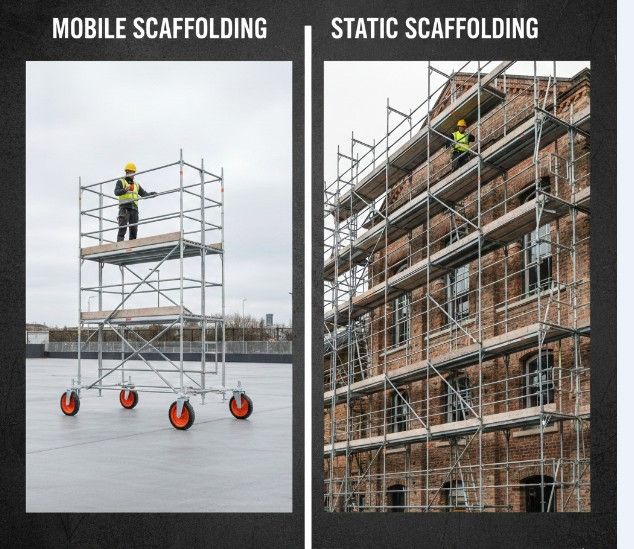
When planning construction or maintenance projects, selecting the right scaffolding solution is critical. The choice between mobile scaffolding and static scaffolding is one of the most consequential decisions a site manager or contractor will make before work begins. Get it right, and the project runs safely and on schedule. Get it wrong, and you face delays, safety risks, and avoidable costs.
Both mobile scaffolding and static scaffolding offer distinct advantages, but understanding their practical applications, safety considerations, and cost implications can help contractors make informed choices.
What is Mobile Scaffolding?
Mobile scaffolding is a portable, wheeled platform system designed for flexibility on dynamic worksites. Unlike stationary systems, it allows workers to relocate quickly without disassembling the structure. Mobile scaffolds are ideal for interior maintenance, painting projects, and short-term construction tasks.
Key benefits include:
- Quick assembly and relocation
- Reduced labor costs for repositioning
- Suitable for uneven surfaces when equipped with adjustable wheels
The aluminium mobile scaffolding variant is highly popular for its lightweight, corrosion-resistant frame that enhances maneuverability while maintaining strength. Many contractors prefer scaffoldings that combine mobility with stability for interior maintenance and short-term projects.
What is Static Scaffolding?
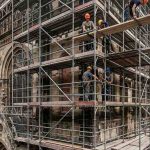
Static scaffolding refers to fixed, non-movable structures used for long-term or high-rise construction projects. These are anchored to the ground or building and provide a stable work platform for heavy-duty construction, masonry, and facade work.
Advantages of static scaffolding:
- Maximum stability for heavy materials
- Suitable for complex architectural structures
- Supports extended work durations without frequent adjustments
Materials often used include steel scaffolding for strength or aluminium scaffolding for corrosion resistance and moderate weight. For projects requiring high-load support, the AFTON H-Frame steel scaffolding provides a reliable, anchored solution suited for long-term construction.
Comparing Mobile and Static Scaffolding
Choosing between mobile scaffolding and static scaffolding depends on project requirements, site conditions, and safety priorities.
| Feature | Mobile Scaffolding | Static Scaffolding |
|---|---|---|
| Mobility | High | Low |
| Setup Time | Quick | Longer |
| Load Capacity | Moderate | High |
| Best Use | Short-term or indoor projects | Long-term or outdoor projects |
| Safety | Relies on proper locking and leveling | Highly stable, suitable for heavy loads |
Mobile scaffolding excels in tasks requiring frequent movement, while static scaffolding is ideal for permanent construction support and heavy-duty applications.
Key Comparison Differences: Mobile Scaffolding vs Static Scaffolding
Stability
Static scaffolding is fixed and anchored, providing strong structural rigidity for demanding environments. Mobile scaffolds rely on wheel locks and leveling, making them stable but less rigid under heavy loads.
Mobility
Mobile scaffolds move easily between work zones without dismantling. Static scaffolds remain fixed and must be taken apart before relocation.
Load Capacity
Static systems support heavier materials, equipment, and multiple workers. Mobile towers are designed for lighter loads and smaller crews.
Setup Time
Mobile units assemble faster due to modular components. Static installations require more time because of anchoring and structural configuration.
Height Access
Static scaffolding is suited for high-rise and multi-level work. Mobile scaffolds are generally used at lower heights unless specially engineered.
Safety Considerations
Safety is central to scaffolding selection. Guardrails, fall protection systems, and load rating compliance are essential regardless of scaffold type. Mobile towers should include lockable wheels to prevent unintended movement, while static scaffolds require secure anchoring to withstand vibration or wind loads.
Routine inspections for rust, wear, and loose fittings help maintain compliance with safety regulations. Certified systems built to international standards provide additional assurance of structural reliability.
Cost and Maintenance
Mobile scaffolding generally offers lower initial costs and reduced labor expenses due to easy repositioning. Static scaffolding, while costlier upfront, provides long-term stability for large-scale projects, reducing the need for frequent replacements.
Maintenance involves:
- Checking structural integrity
- Lubricating moving components for mobile scaffolds
- Ensuring rust protection for steel static scaffolds
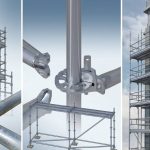
Investing in high-quality materials can minimize downtime and repair costs while maximizing worker safety and productivity. For projects that demand both strength and quick assembly, the AFTON cuplock scaffolding system provides a versatile steel framework suitable for heavy-duty construction and long-term use.
Key Factors to Consider When Choosing Between Mobile and Static Scaffolding
Selecting the right system depends on real jobsite conditions rather than preference alone. Evaluating these factors ensures the scaffold supports productivity, compliance, and worker safety.
- Project duration
- Load requirements
- Working height
- Ground conditions
- Mobility needs
- Budget efficiency
Choose Mobile Scaffolding If:
- Your project involves multiple work zones or frequent repositioning.
- You are working in tight or interior environments.
- You need a quick and economical setup for short tasks.
Examples: painting, electrical installation, signage fitting.
Choose Static Scaffolding If:
- You need a stable platform for heavy materials or high elevations.
- Your project covers large areas or long durations.
- You are handling complex structures requiring engineered layouts.
Examples: high-rise construction, facade restoration, industrial maintenance.
For many projects, combining both systems delivers optimal efficiency, using mobile towers for interior or short tasks and static scaffolds for exterior or heavy-duty work.
FAQs
What is the difference between mobile and static scaffolding?
Mobile scaffolding is portable and easy to move, while static scaffolding is fixed and provides greater stability for long-term projects.
Which scaffolding is safer for heavy-duty construction?
Static scaffolding is safer for heavy loads and high-rise work due to its anchored stability and strong load-bearing capacity.
Can mobile scaffolding be used outdoors?
Yes, mobile scaffolding can be used outdoors for short-term tasks, but it requires proper wheel locks and level surfaces for safety.
How do I choose the right scaffolding for my project?
Consider project duration, load requirements, and worksite conditions to decide between mobile or static scaffolding.
Conclusion
Both mobile scaffolding and static scaffolding have unique benefits tailored to specific construction needs. Mobile scaffolds excel in flexibility and short-term projects, while static scaffolds provide stability and support for heavy-duty, long-term construction. Evaluating project requirements, safety standards, and cost considerations will guide contractors to the right choice.
The Right System Starts with the Right Supplier
For over three decades, Abul Fazl Trading has supplied construction professionals across the UAE with scaffolding systems engineered for real-world site conditions. From AFTON aluminium mobile towers to cuplock and H-frame steel systems, every product in the range meets the standards demanded by Dubai’s commercial and industrial construction sector.
If you are unsure which system suits your next project, contact our scaffolding specialists to select the best system for your operational needs.
Additional Practical Guides for Construction Site Safety
- What Is Scaffolding? Types, Uses, and Safety Requirements: A complete guide on scaffolding, its types, uses & safety requirements.
- Steel vs Aluminium Scaffolding: Which One to Choose?: Compare strength, weight, and durability to pick the right scaffold.
- Guide to Scaffold Use in the Construction Industry in UAE: Explains approved usage practices, safety compliance, and on site regulations.
- How to Choose the Right Scaffolding System in UAE: Helps buyers select the correct scaffolding based on project needs.
- Scaffolding Inspection Checklist: What to Check Before Use: Essential steps to ensure scaffolding safety and compliance every time.