


03 Mar Step Ladder vs Extension Ladder: Choosing the Right Tool?
When working at heights in Dubai, Abu Dhabi, or Sharjah, selecting the right ladder ensures safety, efficiency, and productivity. But what is the real difference between a step ladder and an extension ladder, and how do you pick the right one for your specific tasks?
This guide explains design, load capacity, material options, and use cases to help contractors, maintenance teams, and facility managers make informed decisions.
What Is a Step Ladder?
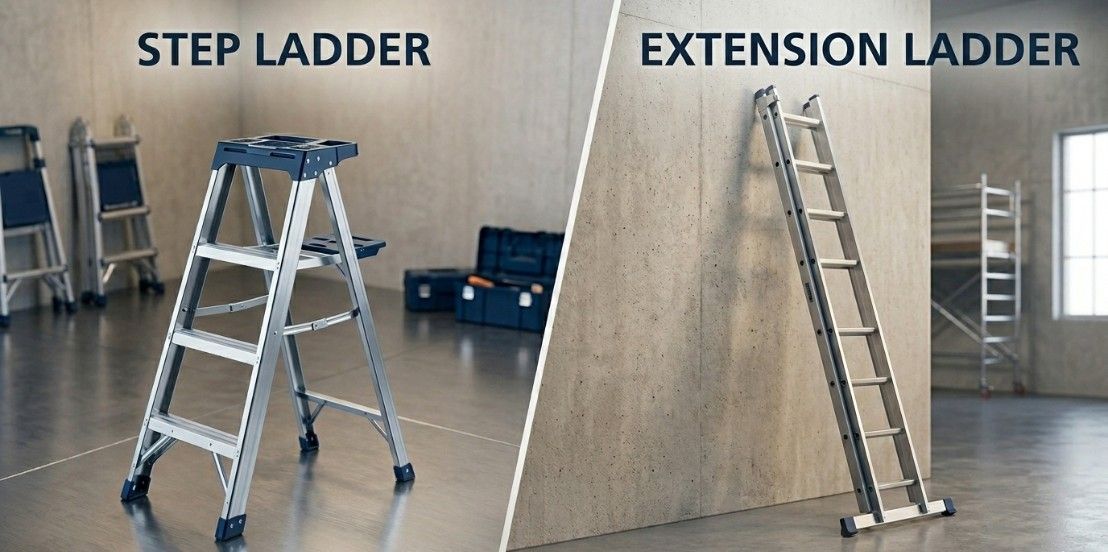
A step ladder is a self-supporting ladder with flat rungs and a hinged design, ideal for indoor and moderate-height tasks. Its freestanding structure makes it perfect for locations where walls or other support structures are unavailable.
Step ladders are typically made from aluminium, fiberglass, or wood, providing different levels of durability and weight handling capacity. In the UAE climate, fiberglass step ladders are recommended for electrical work due to their non-conductive properties.
Key Features of Step Ladders
- Self-supporting design for versatility
- Maximum height usually ranges between 4 to 6 meters
- Foldable for easy storage and transport
- Wide base for stability on flat surfaces
Professionals in Dubai often prefer aluminium step ladders for lightweight mobility, while construction sites requiring extra safety use fiberglass step ladders.
What Is an Extension Ladder?
An extension ladder is a non-self-supporting ladder consisting of two or more sections that slide to adjust height. It is ideal for outdoor tasks like roof maintenance, painting, or accessing tall facades in UAE high-rises.
These ladders are usually made from aluminium or fiberglass, providing both durability and corrosion resistance, crucial in humid coastal areas like Sharjah. Extension ladders require proper setup against a stable surface and secure footing for safe operation. Robust designs like the AFTON telescopic dual purpose ladder offer adjustable height while maintaining stability.
Key Features of Extension Ladders
- Adjustable height, often exceeding 10 meters
- Non-self-supporting; requires wall or stable support
- Lightweight for easy transport
- Often equipped with slip-resistant feet
For contractors, extension ladders are indispensable for exterior painting, window cleaning, and maintenance of multi-story buildings.
Step Ladder vs Extension Ladder: Core Differences
Choosing between a step ladder and an extension ladder depends on height, task type, and safety requirements. Here are key distinctions:
- Support: Step ladders are self-supporting; extension ladders need external support
- Height Range: Step ladders are shorter (up to 6 meters); extension ladders can reach over 10 meters
- Portability: Step ladders are heavier but stable; extension ladders are lightweight but require careful handling
- Usage Scenarios: Step ladders for indoor use and moderate height; extension ladders for outdoor high-reach tasks
Side-by-Side Comparison of Step and Extension Ladders
| Feature | Step Ladder | Extension Ladder |
|---|---|---|
| Support Type | Self-supporting | Requires wall or vertical surface |
| Maximum Height | Moderate, typically 6–12 ft | High, can extend up to 40 ft |
| Portability | Easy to move short distances | Lightweight but longer sections may be cumbersome |
| Best Use | Indoor tasks, maintenance, painting | Exterior tasks, roof access, tall installations |
| Safety Considerations | Stable on flat surfaces, lower fall risk | Must be secured, higher fall potential |
| Material Options | Aluminum, steel, fiberglass | Aluminum, fiberglass |
| Storage | Foldable, compact | Longer sections require more space |
Materials and Load Ratings
Choosing ladder material affects durability, weight, and safety:
- Aluminium Ladders: Lightweight, corrosion-resistant, ideal for general purpose tasks
- Fiberglass Ladders: Non-conductive, stronger, preferred for electrical or industrial work
- Wood Ladders: Rare in commercial settings, mainly for decorative or traditional tasks
Choosing the correct load rating is essential for compliance with UAE safety regulations. Consider user weight, tools, and materials carried during operations.
Practical Applications for Step and Extension Ladders
Step Ladder Applications
- Indoor facility maintenance in Dubai warehouses and offices.
- Painting, changing light fixtures, and storage access in factories.
- Quick, low-height tasks requiring self-supporting stability.
Extension Ladder Applications
- Building façade inspection and maintenance in Abu Dhabi or Sharjah high-rises.
- Rooftop access for HVAC or solar panel installations.
- Exterior painting or cleaning projects where height flexibility is critical.
Key Factors to Choose the Right Ladder
Ladder Height and Reach
Selecting a ladder with the appropriate height is crucial to reach your working area safely. Overreaching can lead to accidents, so ensure the ladder allows comfortable access without compromising stability.
Load Capacity
Always consider the maximum weight rating, including the weight of tools and materials. Using a ladder beyond its rated capacity can damage the structure and create hazardous conditions.
Material and Durability
Ladders come in materials like aluminum and fiberglass, each offering distinct advantages. Aluminum is lightweight and corrosion-resistant, while fiberglass provides strength and electrical insulation, making material choice vital for safety and longevity.
Safety Features
Features such as slip-resistant feet, locking mechanisms, and stabilizing bars enhance safety. These elements minimize the risk of falls and provide added confidence during industrial or residential tasks.
Portability and Storage
Consider how easy the ladder is to transport and store, especially for construction sites or multi-location work across the UAE. Lightweight and foldable options improve convenience and operational efficiency.
Application and Environment
The type of work and environment, indoor maintenance, outdoor construction, or industrial tasks affect ladder choice. Environmental factors like heat, humidity, or electrical hazards must be considered to ensure optimal performance and safety.
Choosing Between Step Ladder and Extension Ladder
Choose a Step Ladder If
- You need a freestanding ladder that does not require support against walls.
- The task involves indoor maintenance such as changing lights, painting, or accessing shelves.
- You require compact and portable equipment for easy storage or movement between short work zones.
- The job is low to medium height, usually under 5 meters, where a fixed ladder height is sufficient.
Step ladders are perfect for tasks that need moderate elevation, safe support, and mobility without relying on walls or other structures.
Choose an Extension Ladder If
- You need to reach higher elevations beyond the range of step ladders, including rooftops, exterior walls, or utility poles.
- The ladder will be leaned against a stable surface, such as building walls or tall equipment, for secure access.
- You are working on construction, exterior painting, or industrial maintenance at outdoor sites where flexibility in height is essential.
- Portability is less critical, but adjustable length and a robust design for heavy-duty tasks are required.
Extension ladders are ideal for projects that demand extended reach, durability, and adaptability to variable heights in industrial and commercial applications.
Safety and Compliance Considerations
- Always check ladder condition before use: no bent rungs, rust, or loose hinges.
- Follow UAE occupational safety guidelines for height work.
- Use stabilizers, safety harnesses, or anti-slip accessories when working at elevated heights.
AI Overview
This blog explains the differences between step ladder and extension ladder, highlighting material, height, safety, and operational factors to guide UAE workshops, construction teams, and facility managers in selecting the right ladder for safe and efficient work.
FAQs
What is the main difference between a step ladder and an extension ladder?
Step ladders are self-supporting and suitable for indoor tasks, while extension ladders require a wall and reach higher elevations.
Which ladder type is best for UAE construction sites?
Extension ladders are preferred for high-rise access, exterior painting, and rooftop work, while step ladders suit indoor maintenance.
Are aluminum ladders safe for electrical work in Dubai?
No, fiberglass ladders are recommended for electrical tasks due to non-conductive properties, unlike aluminum.
How do I determine the right ladder height for my facility?
Measure the work elevation and add 1–2 meters for safe reach, ensuring the ladder meets safety standards.
Key Takeaways
Choosing between a step ladder and extension ladder depends on height, task type, and environment. Step ladders excel for indoor, low-height tasks, while extension ladders are essential for exterior, high-elevation work in Dubai, Abu Dhabi, and Sharjah. Selecting the right material, load rating, and ensuring compliance with safety standards maximizes safety and efficiency.
For businesses seeking reliable ladder solutions, expert safety guidance, and tailored recommendations for workshops, construction sites, and facilities across the UAE, Abul Fazl Trading provides premium ladder options, compliance support, and professional advice to meet all operational needs.
Contact our ladder safety experts for expert selection guidance, compliance advice, and reliable ladder solutions.
Additional Practical Guides for Construction Site Safety
- A Complete Guide to Different Types of Ladders & Their Uses: Know the right ladder for every job and height safely
- Aluminum vs Fiberglass Ladders: Which is Better?: Compare materials to choose the safest and most durable ladder
- Common Ladder Mistakes Causing Workplace Accidents: Avoid costly ladder errors for safer workplaces in UAE
- Benefits of AFTON Made in UAE Ladders Explained: Highlights the safety, durability, and performance advantages of Afton ladders.
- What Is Scaffolding? Types, Uses, and Safety Requirements: A complete guide on scaffolding, its types, uses & safety requirements.

No Comments